Category Archives: Uncategorized

Empty Refrigerator | Refrigerator Service in Suffolk County | Nassau County

4 Keys to Refrigerator Maintenance

Appliances
aren’t cheap – and refrigerators are no exception. New
refrigerators start at several hundreds of dollars, and top-end
models can easily sell for several thousands. No matter how much you
paid for yours, chances are you will want it to last as long as
possible. Save yourself from refrigerator breakdowns by following
these four simple tips, courtesy of the experts at 24/7 Refrigerator
Service.

Clean the Condenser Coils
Condenser
coils are located on the back of your refrigerator, and are a key
component to your refrigerator’s operation. Even in the cleanest of
homes, these coils accumulate hair, dust, and dirt over the course of
several months. Taking a few minutes to clean them every six months
will go a long way to preserving your refrigerator over time. To
clean them, simply slide your fridge away from the wall and vacuum
the coils with your cleaner’s brush attachment.
Keep it Full
Keeping
your refrigerator full will help it maintain its temperature when the
door is open. The benefit of this, besides a consistent temperature
for your food, is that your compressor won’t have to work as hard.
The compressor is the most vital part of a refrigerator and saving it
from daily wear and tear adds up over your appliance’s lifespan. Be
careful though, as overstocking your fridge could prevent proper air
circulation and lead to warm spots.
Give the Refrigerator
Adequate Space
Make
sure there is at least a six inch gap between the back of your
refrigerator and the wall. The back of the refrigerator contains
components which are constantly working and generating heat. Leaving
enough space ensures adequate ventilation and will prevent your unit
from overheating.
Check Your Seals
Your
refrigerator door is lined with a rubber seal which is also known as
a gasket. This seal remains air tight to keep the cold air in your
fridge. A faulty seal will allow the cold air to be lost to the
outside and warm air to enter it, which will make your compressor
work harder to maintain the temperature. An easy way to test the
strength of your refrigerator’s seal is to close the door on a dollar
bill. If you can easily remove or slide the dollar up and down, you
should replace the seal immediately.
If your
refrigerator is giving you issues, there is a chance you could repair
it for a fraction of the cost of replacing it. If you live in Nassau
County or New York City and are having refrigerator issues, call 24/7
Refrigerator Service at 866-782-9376 to schedule an appointment with
a trained technician. You can also connect with us on social media
for more tips and advice – we are active on both Facebook and
Twitter.
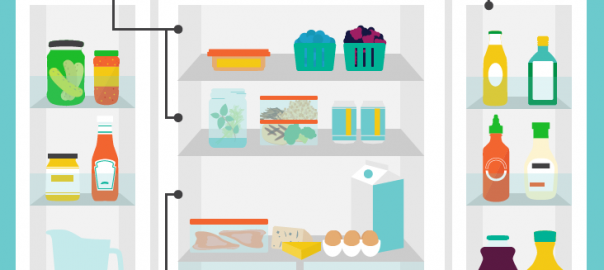
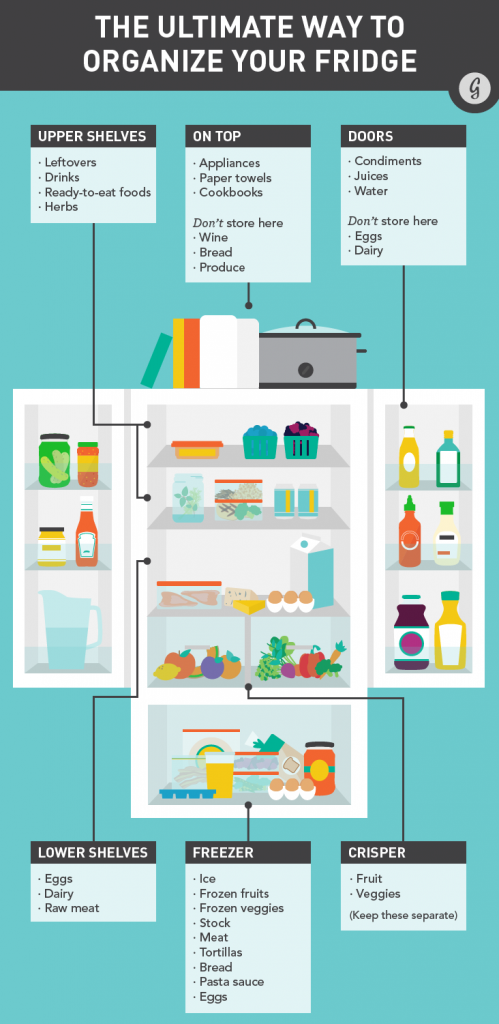
Refrigerator Storage Infographic | Speedy Refrigerator Service

How to Properly Stock a Refrigerator

When we
get home from the grocery store, most of us want to put our food
anywhere in the refrigerator that it will fit so we can get on with
our lives. It usually doesn’t get thought about, but where in the
refrigerator we keep our food has a big impact on how long it lasts.
Using this infographic from Greatist, 24/7 Refrigerator Repairs has
produced a guide detailing which foods should go where in the fridge.

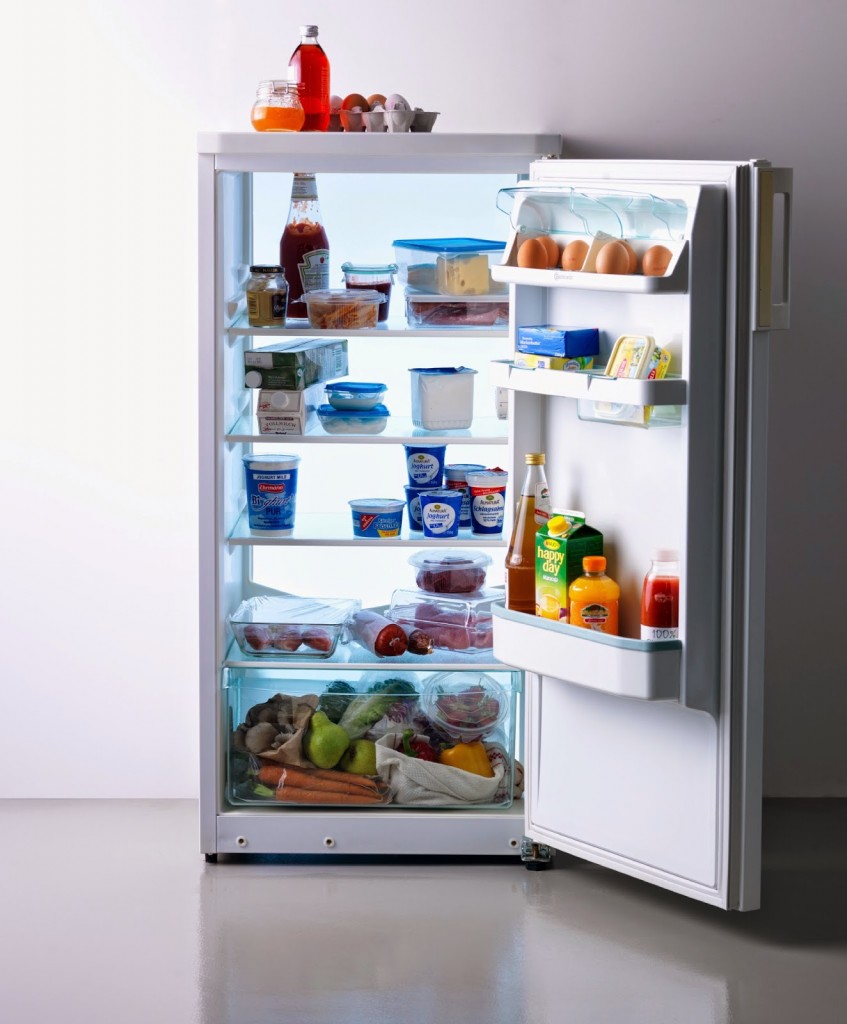
Top Shelves
The
upper shelves of the refrigerator should be reserved for foods which
do not need to be cooked, because the temperatures up here are a
little warmer than the bottom of the refrigerator. Examples of items
perfect for the top shelves are:
  • Juice
    and Soda
  • Leftovers
  • Ready-to-eat
    foods
Bottom Shelves
As
elementary school science taught us, warm air rises. This is true
even inside your refrigerator, and it naturally causes the bottom
shelves to stay colder than anywhere else in the refrigerator.
Because of this, you should place food which is prone to spoiling
here in order to preserve it for as long as possible. Some examples
of these foods are:
  • Dairy
  • Raw
    Meat
  • Eggs
Crisper Drawers
Those
drawers located at the bottom of most refrigerators are called
crisper drawers. The purpose of these drawers is to provide ideal
conditions for fruits and vegetables. They are able to create this
environment by producing humidity levels which vary from the rest of
the refrigerator. You should keep your produce in these drawers, but
keep your fruits and vegetables separated to maintain optimal
freshness.
Door
When
you open the refrigerator door, the items on it become surrounded by
warm air, sometimes for extended periods of time. The temperature of
the items on the door fluctuates more than anywhere else in the
refrigerator, so it is recommended to keep items resistant to
spoiling here such as:
  • Condiments
  • Water
  • Juice
    and Soda
24/7
Refrigerator Service has been repairing refrigerators in Queens and
Long Island for more than 50 years. We offer emergency service every
hour of the day, and can be at your door within one hour. Because our
technicians keep their vans fully stocked, most repairs are done on
the spot. Don’t trust anyone else to fix your refrigerator, freezer,
ice maker, or wine cooler – dial 866-782-9376 today.
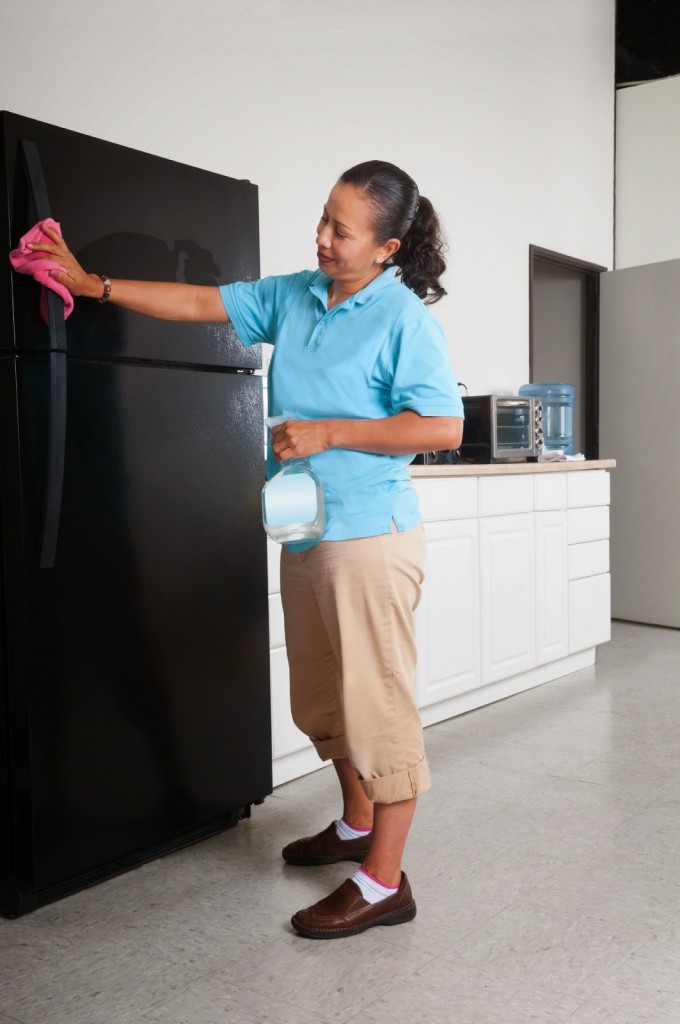
Woman Cleaning Refrigerator | Refrigerator Repairs in NYC | Long Island

Refrigerator Cleaning Tips

Everyone
knows how much of a chore cleaning the refrigerator can be. No matter
how much precaution you take, unpleasant odors, spills, and sticky
spots are inevitable. Use these tips from 24/7 Refrigerator Repairs
to shorten your cleaning process.
Cover your shelves in
plastic wrap.
Every
thorough cleaning of the refrigerator includes the shelves. Most of
the time, this means removing them and washing them in the sink.
While this is a very effective method to keep the inside of your
fridge looking like new, it can be time consuming. To clean your
refrigerator shelves in seconds, line them with plastic wrap. Next
time a spill occurs, simply remove the covering and your shelf is
spotless again. Just don’t forget to put another layer down
afterwards.
Start from the top.
Use
gravity to your advantage and always start cleaning from the top of
the fridge and work your way down. Starting at the top will prevent
bits of grime or dirty water from dripping down on to surfaces you
have already cleaned. When cleaning the back wall, starting from the
top will cause you to use less soap because it will trickle down and
naturally clean the lower surface.
Don’t forget the drip
pan.
Not
every refrigerator has a drip pan, but most that do often go
neglected. To check your model, remove the grill on the bottom on the
fridge and grab your flashlight. The drip pan should be easy to
identify because it is meant to be pulled out. If it is your first
time venturing down there, it may be wise to use rubber gloves. Drip
pans which have never been cleaned can be home to mildew and a
strong, unpleasant smell.
Eliminate the odors.
If a
bad smell is lingering inside of your refrigerator even after
cleaning it, don’t panic. Stick an open box of baking soda on the top
shelf and it should eliminate the odor within a day or two. For
stronger odors, sprinkle vanilla extract on cotton balls and place
them on a small dish in the refrigerator. This should have your
fridge smelling great in just minutes.
24/7
Refrigerator Repairs has been servicing Queens and Nassau County for
over 50 years. Our licensed technicians can service almost any make
and model of refrigerator, freezer, ice maker, and wine cooler. As
our name suggests, we are available at any hour on any day of the
year. Call us today at 866-782-9376 to schedule an appointment or
visit our website for more information.
Refrigerator Terms Glossary | Speedy Refrigerator Service

Refrigerator Terms Glossary

Technical
jargon can be confusing in a lot of industries – refrigeration is
no exception. This glossary makes it easy to understand terms
commonly used when talking about refrigerators.
Adjustable Shelving: the
ability to remove the shelves in your refrigerator and place them in
different levels. This flexibility allows for the storage of large or
odd-shaped items.
Auto Defrost:
automatically prevents the
buildup of ice on the back of the refrigerator by heating the back
wall for a short period of time to melt any ice that may have formed.
The water is usually drained through a duct in the back.
Compressor: essentially
the heart of your refrigerator. A low pressure gas is pumped into the
compressor, which compresses it into a high pressure gas, raising its
temperature. The gas is then moved to the condenser for the next step
of the refrigeration cycle.
Condenser: the
heat exchanger of the refrigerator. The condenser removes the heat
from the gas and condenses it into a liquid refrigerant which, with
the help of some other parts, keeps the inside of your refrigerator
cold.
Crisper Drawer: drawers,
usually located on the bottom of the fresh food section of your
refrigerator, with adjustable humidity settings to keep your produce
fresh for as long as possible.
Digital Display: a
small screen on the inside of some refrigerators which displays the
temperature.
Door Gasket: the
rubber strip found on the inside of your refrigerator door. The
gasket acts as a seal to minimize heat exchange between the inside of
the refrigerator and the rest of your kitchen.
Drain Pan: located
out of sight next to the compressor, the drain pain collects water
produced during the defrost cycle of your refrigerator.
Energy Rating: an
industry standard rating ranging from A-G which indicates how much
energy your refrigerator consumes when operating normally.
Ice Maker: a
device located in the freezer compartment of some models which
receives water from the inlet valve, freezes it into ice cubes, and
automatically fills the ice bin.
Leveling Legs: adjustable
legs located at the base of your refrigerator to allow it to maintain
level on uneven surfaces.
Manual Defrost:
refrigerators without an
auto-defrost feature must be manually defrosted to remove any ice
that has built up. The process of manually defrosting a refrigerator
requires the user to unplug it from the wall and wait for the ice to
melt.
Multi-Zone Cooling: A
feature which allows for multiple zones in your refrigerator to be
set to different temperatures. This is primarily used for cooling
wines and chilling small items (such as soda cans) quickly.
Noise Level: Measured
in dBs, the noise level specifies how loud or quiet your refrigerator
will be when running.
Reversible Door: the
ability for the hinges on your refrigerator doors to be located on
either the left or right side.
Thermostat: a
temperature-triggered switch which toggles the compressor on and off
to maintain the desired temperature inside the refrigerator.
24/7
Refrigerator Repair has been servicing Long Island and Queens for
over 50 years. If you need your fridge fixed in a hurry, we offer
24/7 emergency service and can be at your door within an hour of your
request. Dial 866-782-9376 to make an appointment now or visit our website for more information.
Sources:
Open and Organized Refrigerator | Speedy Refrigerator Service

Ways to Save Energy on Your Second Refrigerator


Do you
find yourself always running out of space in your refrigerator?
Sometimes, the model in your kitchen simply isn’t spacious enough to
meet the needs of your family. It is not uncommon for houses to have
a second refrigerator – maybe it is time for you to invest in one
too. Before you pull the trigger on your purchase, first make sure it
is necessary. In addition to several hundred dollars up front, a
second refrigerator can cost up to $100 a year to operate. If you
decide to buy one, use these tips to save yourself some money.

Buy an Energy Star model
First
and foremost, buy a refrigerator which is Energy Star certified. The
Energy Star label is given to the most energy efficient products by
the EPA. You can find a list of their most efficient products here.
These models may have a more expensive price tag, but they will save
you money in the long run by consuming less energy than non-certified
models.
Keep it out of the garage
Many
families like to keep their second refrigerator in the garage because
of the extra space, but that is one of the worst places you can put
it. An unconditioned garage presents a few problems. Firstly, the
temperature gets very high during the summer, which in turn makes the
refrigerator work harder than normal, which leads to a higher energy
bill. Even worse, if your garage gets too hot or too cold, it can
affect the refrigerator’s internal thermostat and your food can warm
to unsafe temperatures, causing you to throw away or unknowingly eat
your spoiled food.
Don’t buy more than you
need
Before
taking a trip to the local appliance store, think about how much
space you will need in your second refrigerator. More space may be
luxurious, but it also requires more energy to cool. Buying a bigger
fridge than needed also hinders your refrigerators cooling
performance. Failing to consistently keep your refrigerator at least
halfway full will result in the loss of much more cold air when the
door is opened. These fluctuations can lead to prematurely spoiled
food and, once again, a higher electric bill.
When
shopping for a second refrigerator, it is important to make smart
decisions. It is also important to make smart decisions when looking
for a refrigerator repair service – that is why you should choose
24/7 Refrigerator Repair. Proudly serving Nassau County and Queens
for over 50 years, we offer service around the clock – that
includes nights, weekends, and holidays. Call 866-782-9376 or visit our website for more information. You can also like us on Facebook
for more refrigeration tips and advice.